
Uncovering how content and language integrated learning classes can be transformative for students
Responsible for English language education: Steven Asquith (Associate Professor)
2025/12/01
研究紹介
OVERVIEW
We interviewed Associate Professor Steven Asquith (responsible for English language education) from the Center for Foreign Language Education and Research at Rikkyo University about his research and future plans.
Please tell us about your research topic and the research you are currently working on.
My research interests are aimed at understanding how transformative pedagogy can be applied and encouraged through content and language integrated approaches. Transformative pedagogy is the idea of education going beyond the passive transmission of knowledge, to learning which focuses on the development of competent, ethical, and socially conscious individuals. I am especially interested in understanding how these ideas can be adapted to content and language integrated approaches in which students are already undertaking the challenge of learning academic content in the additional language, English. As these types of content and language programs continue to grow in popularity, I think it is important to understand how they can be aligned with positive individual and social change.
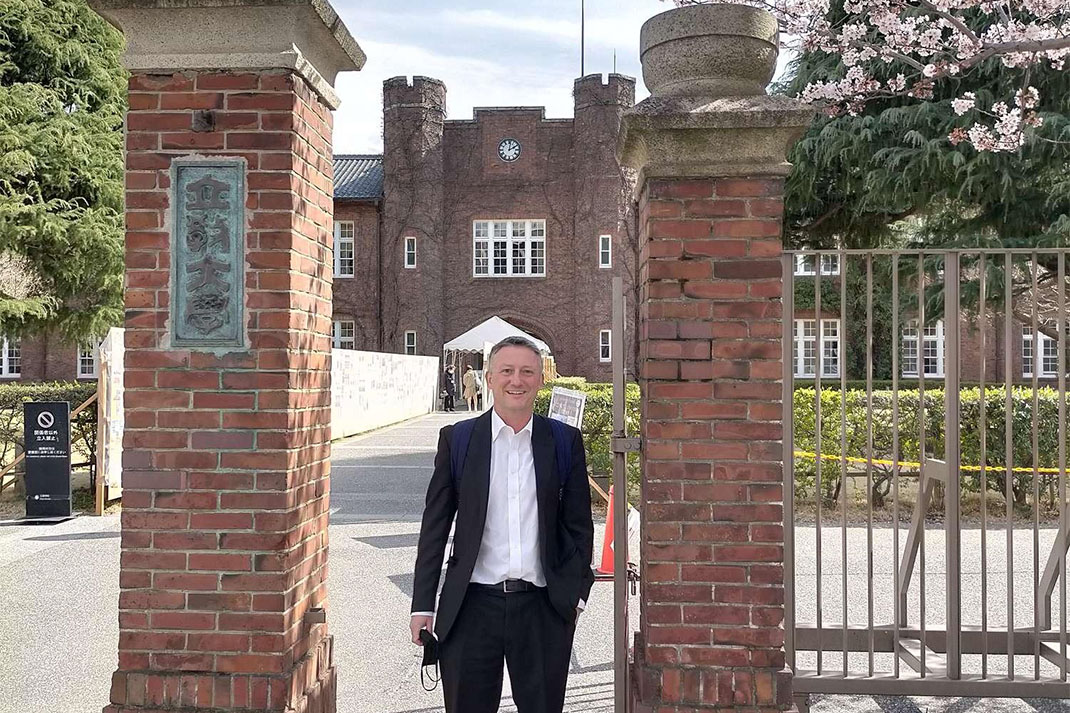
First day of my new adventure at Rikkyo (2022)
One idea I find fascinating is the notion of sharing students' subjective knowledge, skills, and viewpoints as a means of developing interpersonal/intercultural understanding, critical thinking, and creativity. My doctoral supervisors, Kalantzis and Cope (2016) describe this as productive diversity. Recently I have been conducting classroom-based action research to learn about how sharing students' individual perspectives on social issues during a current news course might influence their feelings of competence, autonomy, and relatedness. I have also researched students' perspectives on using the creative problem-solving processes to design sustainable tourism solutions. I really feel that student’s individuality can be a meaningful resource for learning
I am also currently working on a project to investigate how teachers of content and language integrated courses (CLIL/CBI) engage with learner differences as part of my doctoral dissertation. One of the things I have found the most challenging and rewarding in teaching content and language integrated learning (CLIL) courses is the frequently big differences in students' proficiencies, competencies, and experiences. I am curious to understand how other teachers perceive such learner differences and how they may adapt their teaching accordingly.
I am also currently working on a project to investigate how teachers of content and language integrated courses (CLIL/CBI) engage with learner differences as part of my doctoral dissertation. One of the things I have found the most challenging and rewarding in teaching content and language integrated learning (CLIL) courses is the frequently big differences in students' proficiencies, competencies, and experiences. I am curious to understand how other teachers perceive such learner differences and how they may adapt their teaching accordingly.
Please tell us how you became interested in your research.
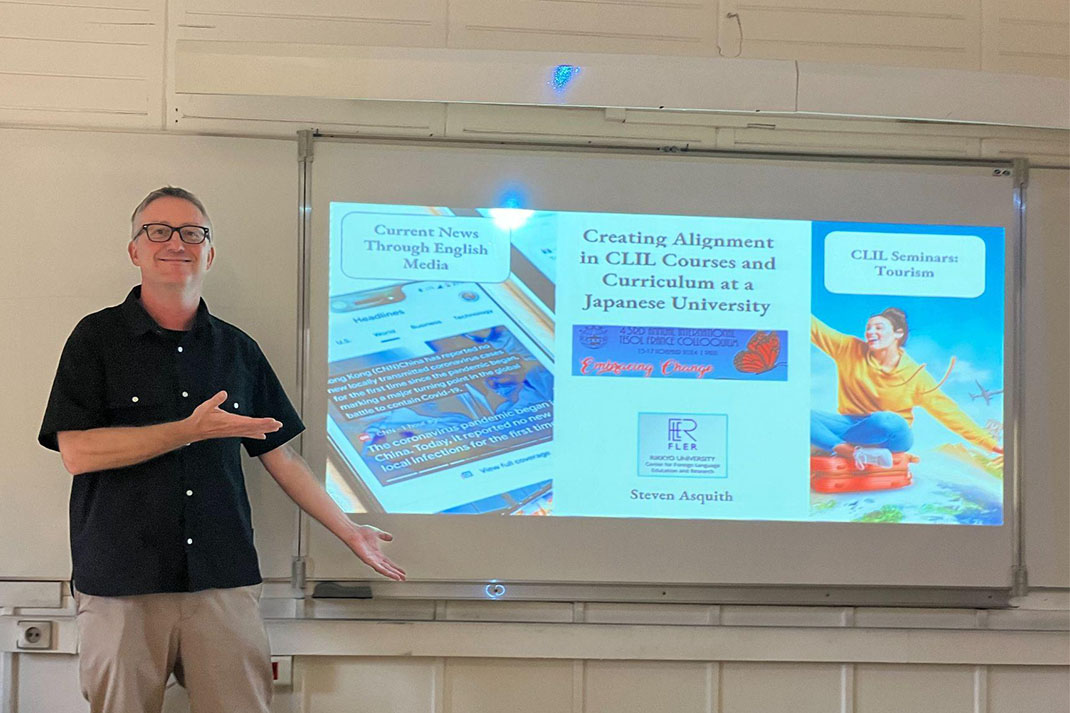
Presenting about the Rikkyo CLIL elective courses and curriculum at the Paris TESOL Colloquium (2024)
My research interests come from my love of creating, teaching, and developing new courses and materials. This started earlier in my teaching career when I had the chance to develop, teach and research classes which used a multiliteracies approach. I enjoyed this approach so much that I chose a Doctor of Education program led by two of its founders, Kalantzis and Cope, which focused on innovative pedagogical design. Although the program has addressed many aspects of learning design, I found the approaches to developing more inclusive teaching to be the most interesting and applicable to my classes. During the course I have learned so many interesting and transformative approaches to teaching and I want to continue researching and developing these ideas.
What do you think is the most interesting and rewarding aspect of your research?
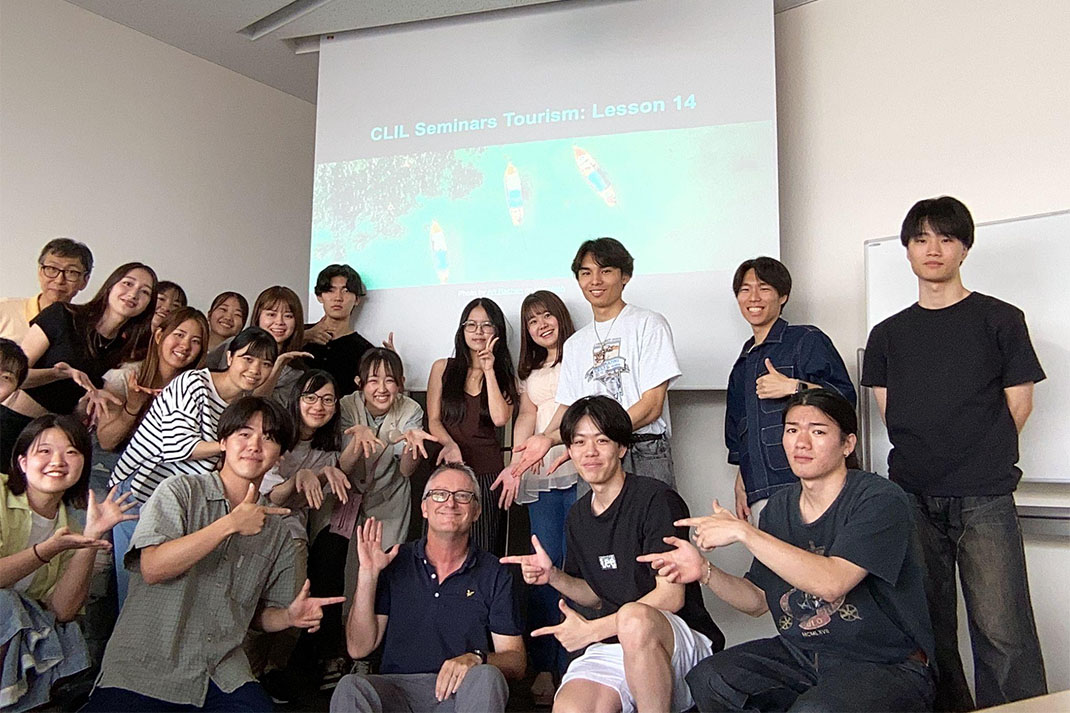
With the CLIL Tourism elective course students in the final class (2025)
By far the most interesting aspect of my research is reading and analysing students' work, reflections, and feedback. When conducting my research into the Current News course students shared and reflected on their unique perspectives on topics such as finding a job post-graduation, neurodiversity, LGBTQ+ rights, and overtourism. These resulted in deep discussions in which students could not only appreciate the diversity of their classmates' views but also could consider how their own views were constructed. They were also able to see how such issues are framed very differently depending on the specific English media text. It was rewarding to learn in reflections that students were often surprised to encounter completely new perspectives on topics during the course. I think these types of critical literacy skills are so important in the modern world.
Please tell us about your experiences and what you learned during your student days (university, graduate school, studying abroad, etc.).
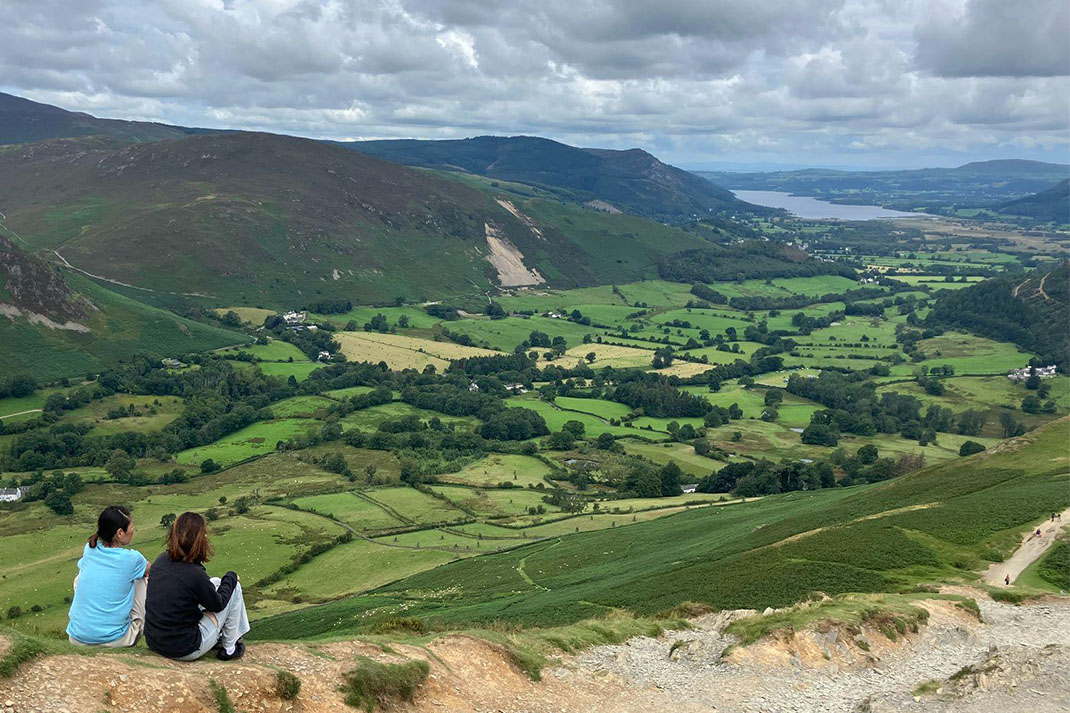
Back to the place where it all began (2025)
As an undergraduate student in the early 90s moving from a small, insular, working-class town in the north of England to a cosmopolitan university in London, I found the experience truly life changing in terms of opening my mind to other cultures and ways of thinking. At that time, I especially enjoyed making friends with the international students and learning more about their lives and backgrounds. Moving to Japan was a similar experience in that not only was I able to immerse myself in Japanese life, but I was also able to make many friends from across the globe through my hobbies and interests. Thinking back to that naive 18-year-old who just arrived in the big city, I hope that my students are also able to go on a similar journey of cultural and self-discovery.
Please tell us about your current job at the university. What is it like? What are the fun and challenging aspects of it?
One of the things I enjoy most about my job at Rikkyo outside teaching has been getting involved with the many faculty development (FD) initiatives. Since more emphasis started to be placed on FD in 2023, we have had almost weekly talks, course specific workshops, created newsletters, and produced resources. I have especially enjoyed helping coordinate some of these activities, and the results always exceed my expectations. It is also exciting to be able to participate with FD related to the other language courses. Most of all, I can say I feel privileged to have such knowledgeable, motivated, and competent colleagues and enjoy the chance to learn from them whenever the opportunity arises.
Future plans
In the future I intend to continue to learn about how content and language courses can be created in a way which is transformative for students. I am especially looking forward to collecting and analysing data on how content and language teachers engage with learner differences from across Japan. I hope I can discover some factors to help encourage the spread of more inclusive content and language teaching practices.
※記事の内容は取材時点のものであり、最新の情報とは異なる場合があります。
